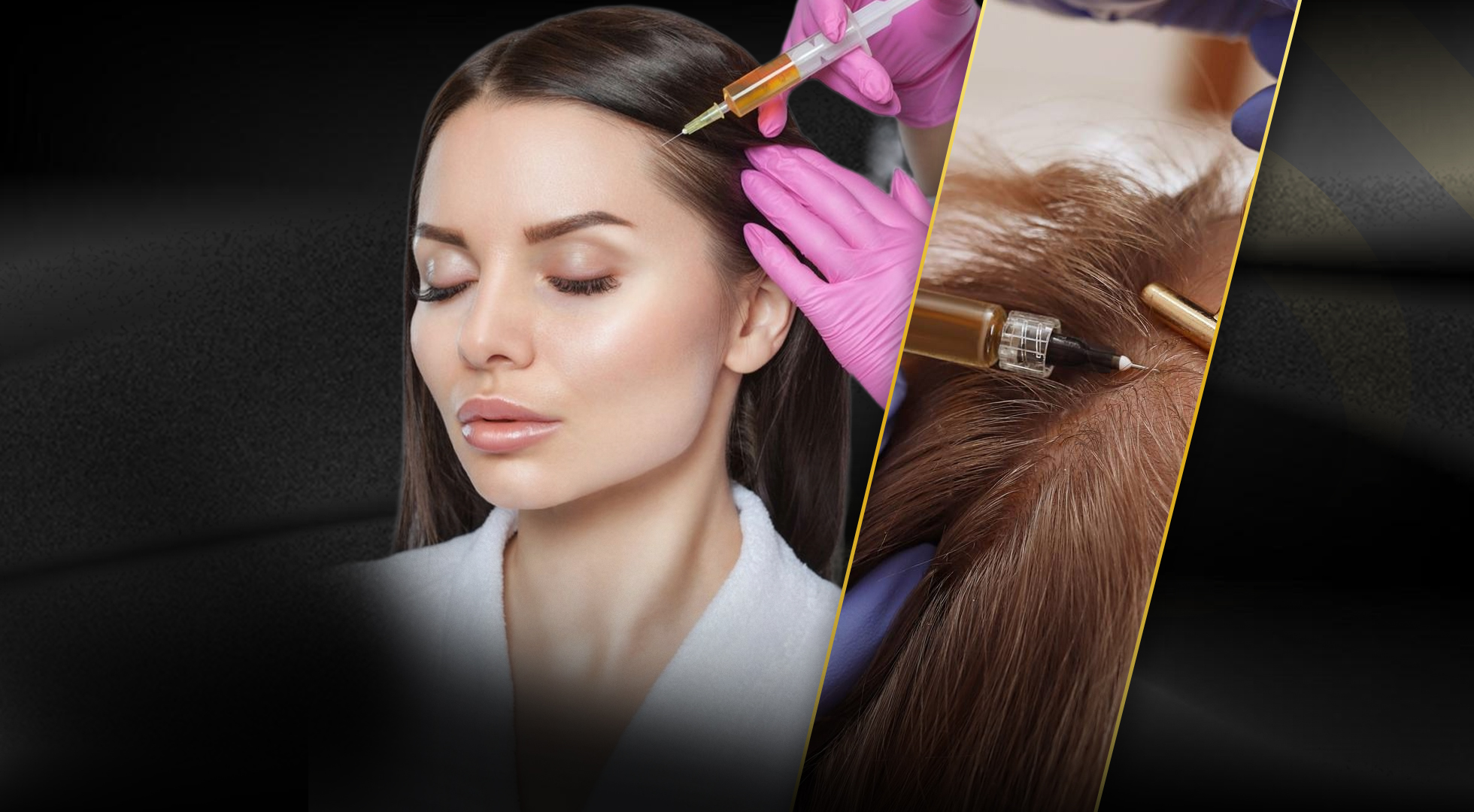
PRP Hair Treatment: What Is It?
Discover how PRP hair treatment works, who it is suitable for, its benefits, recovery process, and why it has become a popular non-surgical option for hair restoration and hair loss management.
What Is PRP Hair Treatment?
PRP Hair Treatment, or Platelet-Rich Plasma Therapy, is a non-surgical hair restoration procedure that uses the patient's own blood to stimulate hair follicles and support healthier hair growth.
The treatment is designed to improve hair quality, strengthen existing hair, and help slow the progression of certain types of hair loss.
Because PRP uses the body's natural growth factors, it has become a popular option for patients looking for a minimally invasive approach to hair restoration.
How Does PRP Hair Treatment Work?
PRP therapy relies on platelets, which are naturally present in the blood and contain growth factors involved in tissue repair and regeneration.
The procedure generally involves three steps:
Step 1: Blood Collection
A small sample of blood is taken from the patient, similar to a routine blood test.
Step 2: PRP Preparation
The blood is placed in a specialized centrifuge that separates the platelet-rich plasma from other blood components.
This concentrated plasma contains a high level of growth factors.
Step 3: Scalp Injections
The PRP is carefully injected into targeted areas of the scalp where hair thinning or hair loss is present.
The goal is to stimulate hair follicles and improve the scalp environment for hair growth.
What Conditions Can PRP Help Treat?
PRP hair treatment is commonly used for:
Early-stage hair thinning
Male pattern hair loss
Female pattern hair loss
General hair weakening
Hair shedding
Hair transplant support
Many patients use PRP as part of a broader hair restoration strategy.
Who Is a Good Candidate for PRP Hair Treatment?
PRP may be suitable for patients who:
Are experiencing early hair thinning
Have mild to moderate hair loss
Want a non-surgical treatment option
Wish to strengthen existing hair
Are in good overall health
Patients with completely inactive hair follicles may require alternative treatments, such as hair transplantation.
A consultation is essential to determine candidacy.
What Are the Benefits of PRP Hair Treatment?
PRP offers several potential advantages:
Minimally invasive procedure
Uses the patient's own blood
No surgical incisions
Minimal downtime
Supports healthier hair growth
Can improve hair thickness and quality
Can complement hair transplant procedures
Because PRP utilizes naturally occurring growth factors, many patients appreciate its regenerative approach.
PRP After Hair Transplant Surgery
PRP therapy is frequently combined with hair transplantation.
After a hair transplant, PRP may help:
Support healing
Improve scalp recovery
Strengthen transplanted follicles
Promote healthier hair growth
Many clinics incorporate PRP into comprehensive hair restoration programs.
What Is the Procedure Like?
PRP sessions are generally quick and straightforward.
Most treatments take approximately:
30 to 60 minutes
The procedure is usually performed on an outpatient basis, allowing patients to return home the same day.
Is PRP Painful?
Most patients tolerate PRP treatment well.
Some individuals may experience:
Mild discomfort during injections
Temporary scalp sensitivity
Slight redness after treatment
These effects are usually short-lived and resolve quickly.
What Is Recovery Like?
One of the advantages of PRP therapy is the minimal recovery period.
Patients may experience:
Mild redness
Temporary scalp tenderness
Minor swelling at injection sites
Most individuals can return to normal activities shortly after treatment.
Your specialist will provide personalized aftercare instructions.
When Will Results Become Visible?
Hair growth is a gradual process, and PRP results develop over time.
Patients may notice:
Improved hair quality
Reduced shedding
Increased hair strength
Greater hair density
Visible improvements often appear progressively over several months.
Results vary depending on the individual's hair loss pattern and treatment plan.
How Many PRP Sessions Are Needed?
The number of sessions varies according to the patient's needs.
Treatment plans often include:
An initial series of sessions
Maintenance treatments when appropriate
Your specialist will recommend a personalized schedule based on your hair restoration goals.
PRP vs Hair Transplant: What's the Difference?
PRP Hair Treatment
Non-surgical
Stimulates existing follicles
Minimal downtime
Best for early-stage thinning
Hair Transplant
Surgical procedure
Relocates hair follicles
Permanent restoration of lost hair
Suitable for more advanced hair loss
In some cases, the two treatments can complement one another.
Why Choose Luxora Clinic?
At Luxora Clinic, every hair restoration treatment is customized according to the patient's unique needs.
Our services include:
Comprehensive hair analysis
PRP hair treatments
Advanced FUE and DHI hair transplantation
Personalized treatment plans
Experienced hair restoration specialists
Dedicated patient coordinators
VIP transportation services
Comprehensive patient support
Our goal is to help patients achieve healthier, fuller-looking hair through evidence-based treatment approaches.
A Natural Approach to Hair Restoration
PRP Hair Treatment offers a minimally invasive option for patients looking to strengthen their hair and address early hair loss. By utilizing the body's own growth factors, PRP can support healthier hair growth and complement other hair restoration treatments.
At Luxora Clinic, our specialists create personalized treatment plans designed to help patients achieve stronger, healthier, and more confident results.