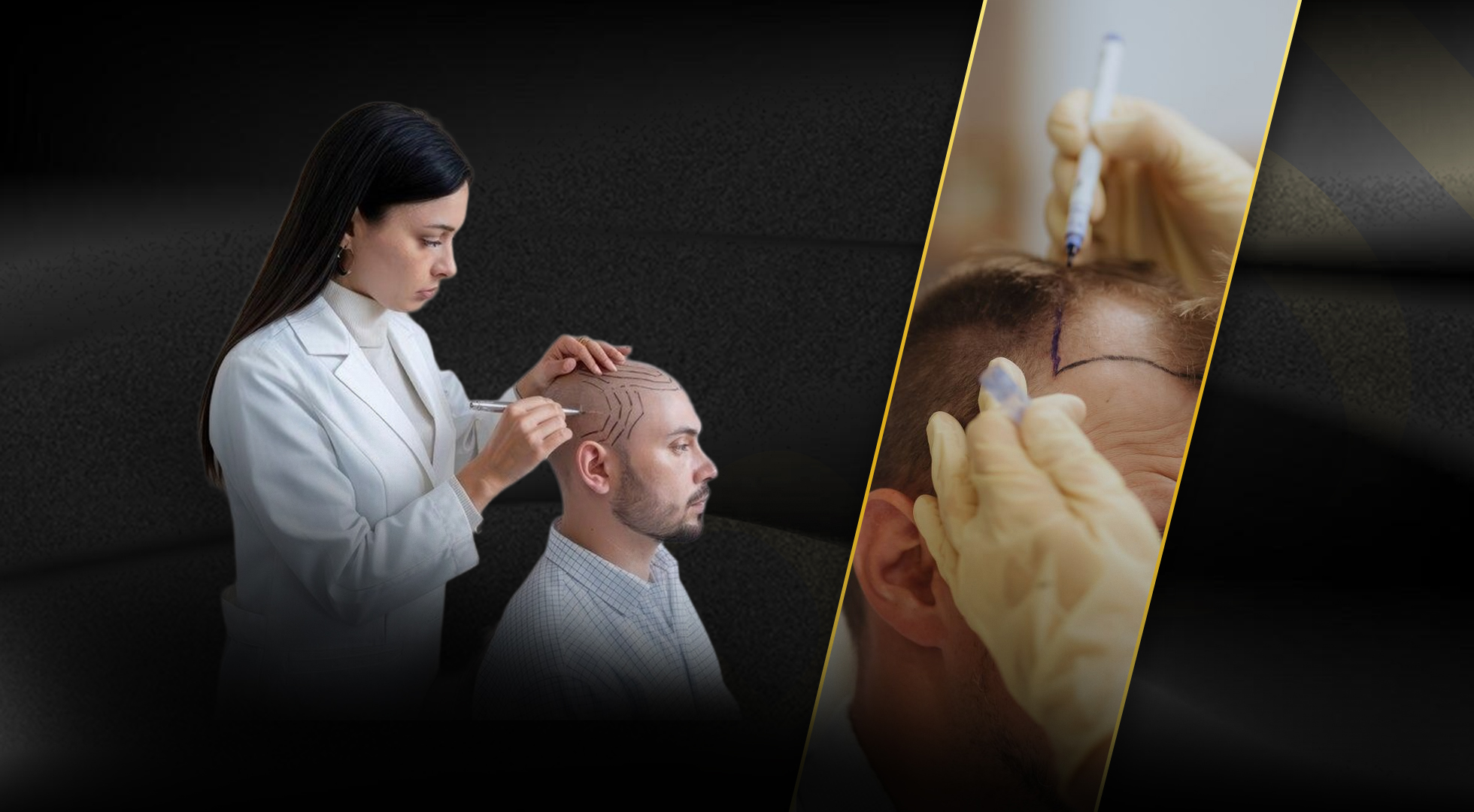
FUE vs DHI Hair Transplant: Which Is Better?
Compare FUE and DHI hair transplant techniques to understand the key differences, benefits, recovery, and which method may be best for your hair restoration goals.
Understanding Modern Hair Transplant Techniques
Hair transplantation has evolved significantly over the last decade, with FUE (Follicular Unit Extraction) and DHI (Direct Hair Implantation) becoming two of the most popular techniques worldwide.
Both methods can produce natural-looking, permanent results, but they differ in how hair follicles are implanted and the level of precision involved.
The question is not necessarily which technique is better overall, but which one is more suitable for your specific hair loss pattern, donor area, and desired outcome.
What Is FUE Hair Transplant?
FUE (Follicular Unit Extraction) is one of the most widely used hair restoration techniques.
During the procedure:
Individual hair follicles are extracted from the donor area
Small channels are created in the recipient area
Hair grafts are implanted into those channels
FUE is known for its versatility and ability to treat large areas of hair loss.
Benefits of FUE
Suitable for larger treatment areas
Minimal scarring
Natural-looking results
Efficient graft harvesting
Proven long-term success
FUE remains one of the most commonly performed hair transplant procedures worldwide.
What Is DHI Hair Transplant?
DHI (Direct Hair Implantation) is an advanced variation of the FUE technique.
The extraction process is similar to FUE, but implantation differs.
Using a specialized implantation pen, the surgeon can:
Implant follicles directly into the scalp
Control angle and direction more precisely
Place grafts without creating channels beforehand
This allows for highly detailed hairline design and dense implantation.
Benefits of DHI
Precise graft placement
High-density results
Greater control over hair growth direction
Excellent for hairline refinement
Reduced graft handling
DHI is often chosen for patients seeking maximum precision, especially in visible areas such as the frontal hairline.
FUE vs DHI: Key Differences
| Feature | FUE | DHI |
|----------|-----|-----|
| Extraction Method | Individual follicle extraction | Individual follicle extraction |
| Implantation Method | Channels created before implantation | Direct implantation with specialized pen |
| Hairline Precision | Excellent | Exceptional |
| Large Area Coverage | Excellent | Good |
| Density Potential | High | Very high |
| Procedure Duration | Typically shorter | Often longer |
| Ideal For | Larger bald areas | Hairline and density-focused cases |
The primary difference lies in the implantation technique rather than the extraction process.
Which Technique Looks More Natural?
Both FUE and DHI can achieve extremely natural-looking results when performed by experienced specialists.
Natural results depend on:
Hairline design
Graft placement
Hair angle and direction
Surgeon experience
The technique alone does not guarantee a better result—the expertise of the medical team is equally important.
Which Technique Is Better for Density?
DHI is often associated with:
Higher implantation precision
Dense packing of grafts
Detailed hairline work
For this reason, DHI is frequently chosen for patients seeking maximum density in specific areas.
However, FUE can also achieve excellent density when properly planned.
Which Technique Is Better for Extensive Hair Loss?
For larger treatment areas, FUE may offer advantages because:
It can efficiently cover bigger regions
It is highly versatile
It allows transplantation of a large number of grafts
Patients with advanced hair loss are often excellent candidates for FUE.
Recovery Differences
Recovery is generally similar for both techniques.
First Week
Patients may experience:
Mild redness
Small scabs
Temporary sensitivity
Weeks 2 to 4
During this phase:
Scabs disappear
Transplanted hairs may shed
The scalp continues healing
Months 3 to 12
New hair growth gradually develops, with final results typically visible after several months.
Which Technique Is Right for You?
FUE May Be Best If:
You have significant hair loss
You require a large number of grafts
You want comprehensive scalp coverage
You are seeking a proven and versatile technique
DHI May Be Best If:
You want maximum hairline precision
You seek high-density implantation
You have smaller or moderate treatment areas
You prioritize detailed aesthetic refinement
The ideal technique depends on your hair characteristics and restoration goals.
Why Choose Luxora Clinic?
At Luxora Clinic, every hair transplant procedure is customized according to the patient's unique needs.
Our services include:
Comprehensive hair analysis
Advanced FUE and DHI techniques
Personalized hairline design
Experienced hair transplant specialists
Dedicated patient coordinators
VIP transportation services
Hotel accommodation assistance
Comprehensive post-operative follow-up
We focus on achieving natural, dense, and long-lasting hair restoration results.
The Best Hair Transplant Technique Is the One That Fits Your Needs
Both FUE and DHI are highly effective hair transplant methods capable of producing excellent results. Rather than asking which technique is universally better, the most important question is which technique is best suited to your specific hair loss pattern and expectations.
At Luxora Clinic, our specialists evaluate each patient individually to recommend the most appropriate approach, ensuring natural-looking results and a successful hair restoration journey.